No Surprises Act: 6 Month Impact on Billing Disputes 2026

The No Surprises Act, implemented to shield patients from unexpected medical bills, has significantly reshaped the landscape of out-of-network billing disputes in its initial six months of 2026, influencing both patient financial burdens and provider reimbursement strategies.
The implementation of the No Surprises Act impact has been a landmark moment in U.S. healthcare policy, designed to protect consumers from unforeseen medical costs. As we delve into the initial six months of its federal policy implementation in 2026, understanding its effects on out-of-network billing disputes becomes crucial for patients, providers, and insurers alike. This analysis seeks to illuminate the tangible changes and ongoing challenges.
Understanding the No Surprises Act: A Quick Overview
The No Surprises Act (NSA), effective January 1, 2022, but with its full impact continually evolving, aims to protect individuals enrolled in group and individual health plans from receiving surprise medical bills for most emergency services, non-emergency services from out-of-network providers at in-network facilities, and air ambulance services from out-of-network providers. This critical legislation emerged to address a pervasive problem that often left patients with exorbitant bills they had no means to anticipate or control.
Before the NSA, patients often found themselves caught in the middle of billing disputes between their insurance companies and out-of-network providers. These surprise bills could arise even when patients sought care at in-network facilities, simply because a specialist or ancillary service provider (like an anesthesiologist or radiologist) was not part of their insurance network. The financial burden could be devastating for many families.
Key Provisions and Protections
The NSA introduced several significant protections and mechanisms to address these issues. These provisions are designed to shift the burden of payment disputes from the patient to the providers and insurers, ultimately aiming for a more transparent and equitable healthcare billing system.
- Emergency Services: Patients are only responsible for their in-network cost-sharing amount, even if the service is provided by an out-of-network facility or provider.
- Non-Emergency Services at In-Network Facilities: For certain services, out-of-network providers cannot bill patients more than their in-network cost-sharing amount.
- Air Ambulance Services: Similar protections apply to air ambulance services, preventing balance billing from out-of-network providers.
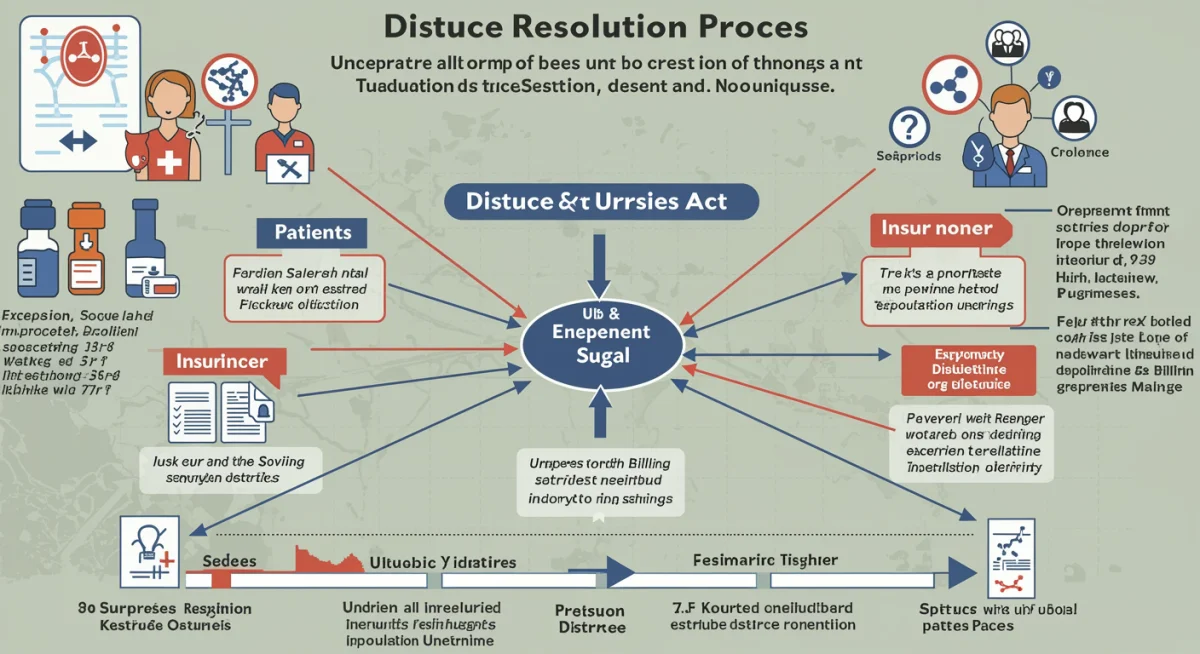
- Independent Dispute Resolution (IDR): A federal IDR process was established to resolve payment disputes between providers/facilities and health plans/issuers.
In essence, the No Surprises Act represents a significant step towards greater patient financial protection within the complex U.S. healthcare system. Its core principle is to ensure that patients are not penalized for circumstances beyond their control, fostering a more predictable and fair billing environment.
Initial Six Months: Early Indicators and Trends in 2026
The first six months of 2026 have provided valuable insights into the practical application and immediate consequences of the No Surprises Act. While a definitive long-term assessment is still premature, early indicators suggest a mixed bag of outcomes, with notable shifts in billing practices, dispute volumes, and patient experiences. Data collection and analysis during this period have been crucial for understanding the policy’s initial trajectory.
One of the most immediate effects observed is a reported decrease in the number of balance bills directly received by patients. This suggests that the primary goal of shielding patients from unexpected costs is, to some extent, being met. However, this reduction in patient-facing bills has corresponded with a significant uptick in the number of disputes entering the Independent Dispute Resolution (IDR) process.
Volume and Nature of IDR Disputes
The federal IDR process, designed as a backstop for payment disagreements, has been inundated with cases. This high volume indicates that while patients are less likely to receive surprise bills, providers and insurers are frequently unable to agree on appropriate reimbursement rates for out-of-network services. The nature of these disputes often revolves around the qualifying payment amount (QPA), which is the median in-network rate for a service in a geographic area, and how it should be interpreted and applied.
- Increased IDR Submissions: A surge in cases filed by both providers and payers.
- Complexity of Cases: Many disputes involve intricate details regarding service codes, geographic areas, and provider specialties.
- Operational Challenges: The sheer volume has created backlogs and administrative hurdles for the IDR entities.
The initial six months also highlighted a learning curve for all stakeholders. Providers are adjusting their billing strategies, while insurers are refining their negotiation tactics within the new regulatory framework. Patients, though largely protected from direct surprise bills, still face the indirect effects of these ongoing disputes, which can influence network adequacy and access to care in the long run.
Challenges and Unforeseen Consequences for Providers
While the No Surprises Act aims to protect patients, its implementation has brought a unique set of challenges and unforeseen consequences for healthcare providers. Many providers, particularly those operating in specialties that frequently involve out-of-network care, have expressed concerns about the financial implications and administrative burden imposed by the new regulations. The shift in billing dynamics has necessitated significant operational adjustments.
One primary concern for providers is the impact on reimbursement rates. The reliance on the qualifying payment amount (QPA) as a benchmark in the IDR process has been contentious. Providers argue that the QPA, often based on commercial rates negotiated with large insurers, may not adequately reflect the true cost of care or fair market value for specialized services, especially for smaller practices or those in rural areas. This can lead to lower reimbursements than they would have historically received, potentially affecting their financial viability.
Administrative Burden and Strategic Adjustments
The IDR process itself has presented a substantial administrative burden. Preparing and submitting cases for dispute resolution requires significant time, resources, and expertise. Providers must meticulously document their services, costs, and arguments for a higher reimbursement, diverting resources that could otherwise be used for patient care. The complexity of the process and the backlog of cases have only exacerbated these challenges.
- Reduced Reimbursement: Potential for lower payments due to QPA methodology.
- Increased Administrative Costs: Resources dedicated to IDR case preparation and submission.
- Network Participation Changes: Some providers may reconsider their network participation strategies.
Furthermore, some providers are facing difficult decisions regarding their participation in insurance networks. If the IDR process consistently yields lower reimbursement rates, some out-of-network providers may be incentivized to join more networks, while others might choose to limit services to avoid the complexities of the Act. This dynamic could inadvertently affect patient access to specialized care, particularly in regions with limited provider options. The initial six months indicate a period of significant adaptation and strategic re-evaluation for healthcare providers.
Impact on Insurers and Health Plans: Navigating New Territories
The No Surprises Act has fundamentally altered the operational landscape for insurers and health plans, presenting both opportunities and significant new challenges. While the legislation was intended to curb surprise billing, it has also shifted the negotiation power and financial responsibilities, compelling insurers to adapt their strategies for network management, claims processing, and dispute resolution. The first half of 2026 has been a critical period for these adjustments.
For insurers, the Act’s provisions mean a greater responsibility for resolving payment disputes with out-of-network providers, rather than passing those costs to patients. This has led to a surge in the volume of claims requiring careful review and, frequently, entry into the Independent Dispute Resolution (IDR) process. The administrative overhead associated with managing these disputes, understanding the nuances of the qualifying payment amount (QPA), and engaging with IDR entities has been considerable.
Another area of impact is network adequacy. With providers potentially reconsidering their out-of-network strategies, insurers must proactively ensure their networks remain robust enough to provide timely and accessible care to their members. This could involve renegotiating contracts or expanding networks to include providers who might otherwise have remained out-of-network, thereby influencing overall healthcare costs and premiums.
Challenges in IDR and Cost Management
The IDR process, while designed to be impartial, has also presented its own set of complexities for insurers. They must develop sophisticated data analysis capabilities to justify their proposed payment amounts, particularly when arguing for the QPA’s appropriateness. The administrative costs associated with participating in IDR, including legal and expert fees, add another layer of expense.
- Increased Administrative Burden: Managing a higher volume of out-of-network claims and IDR cases.
- Network Strategy Re-evaluation: Ensuring adequate network coverage in light of provider responses to the Act.
- Cost Containment Pressures: Balancing fair reimbursement with efforts to control overall healthcare expenditures.
Ultimately, insurers are navigating a new regulatory environment where the balance of power in payment negotiations has shifted. Their ability to effectively manage these changes will be crucial for maintaining financial stability and continuing to offer competitive health plans to consumers.
Patient Experience: Protection and Evolving Access to Care
From the patient’s perspective, the No Surprises Act was largely hailed as a victory, promising an end to the anxiety and financial strain of unexpected medical bills. Six months into 2026, the immediate impact on patient experience appears largely positive, particularly in the reduction of direct balance bills. Patients are, for the most part, shielded from the financial disputes that now largely occur between providers and insurers.
The most significant benefit for patients is the newfound peace of mind when seeking emergency care or receiving services at an in-network facility from an out-of-network provider. This protection removes a substantial barrier to accessing necessary medical care, as individuals no longer have to fear astronomical bills for services they did not choose or could not foresee. This aspect aligns perfectly with the Act’s core intent: to empower patients and reduce their financial vulnerability in complex healthcare scenarios.
Potential Indirect Effects on Access
However, the long-term patient experience may also be influenced by the Act’s indirect consequences, particularly concerning access to care. If providers perceive that the IDR process consistently undervalues their services, some might choose to reduce their participation in certain insurance networks or limit the types of services they offer. This could, in turn, lead to fewer in-network options for patients, potentially increasing wait times or requiring travel for specialized care.
- Reduced Financial Burden: Fewer surprise bills directly impacting patients.
- Greater Transparency: Improved understanding of expected costs in certain situations.
- Potential Access Challenges: Indirect effects on network adequacy and provider availability.
While the immediate relief from surprise bills is undeniable, monitoring the evolution of provider networks and service availability will be critical to ensure that patient protections do not inadvertently lead to unintended barriers to care. The ongoing adjustments within the healthcare ecosystem will ultimately shape the comprehensive patient experience under the No Surprises Act.
The Future Outlook: Regulatory Adjustments and Market Evolution
The initial six months of 2026 have laid the groundwork for understanding the No Surprises Act’s real-world implications, but the journey towards a fully optimized and stable system is ongoing. The future outlook involves potential regulatory adjustments, continued market evolution, and a deeper understanding of the Act’s long-term effects on healthcare costs and access. Stakeholders are closely watching for how the federal government might respond to the current challenges.
One area ripe for potential adjustment is the Independent Dispute Resolution (IDR) process itself. The high volume of cases and the administrative backlogs have prompted calls for refinement. This could include streamlining the submission process, clarifying guidelines for IDR entities, or even revisiting aspects of the qualifying payment amount (QPA) methodology to ensure fairer outcomes for both providers and payers. Any changes to the IDR process would have significant ripple effects across the entire system.
Market Adaptation and Policy Refinements
Beyond regulatory changes, the healthcare market will continue to adapt. Providers and insurers will likely develop more sophisticated strategies for negotiation and network management. We might see an increase in value-based care models or new contractual arrangements designed to mitigate the risks and complexities introduced by the NSA. Technological solutions for claims processing and dispute management are also expected to evolve rapidly.
- IDR Process Refinements: Potential for legislative or administrative changes to streamline the dispute resolution.
- Enhanced Data Utilization: Greater reliance on data analytics for QPA determination and negotiation.
- Innovation in Care Models: Exploration of new payment and delivery models.
Furthermore, the long-term impact on healthcare costs and premiums remains an important question. While the Act protects patients from surprise bills, the costs associated with IDR and potential shifts in provider reimbursement could eventually be reflected in overall healthcare expenditures. Continuous monitoring and evaluation will be essential to ensure the Act achieves its intended goals without creating undue financial strain elsewhere in the system. The next few years will be critical in shaping the final legacy of the No Surprises Act.
| Key Impact Area | Brief Description of Six-Month Impact |
|---|---|
| Patient Protection | Significant reduction in patients receiving direct surprise medical bills, enhancing financial security. |
| IDR Process Volume | Substantial increase in Independent Dispute Resolution (IDR) cases, leading to administrative backlogs. |
| Provider Reimbursement | Concerns among providers regarding lower reimbursement rates influenced by the Qualifying Payment Amount (QPA). |
| Insurer Adaptations | Insurers adjusting network strategies and claims processing to manage increased IDR and cost responsibilities. |
Frequently Asked Questions About the No Surprises Act in 2026
The primary goal of the No Surprises Act is to protect patients from unexpected medical bills, specifically those arising from out-of-network emergency services or non-emergency services provided by out-of-network practitioners at in-network facilities. It aims to prevent patients from being caught in billing disputes between providers and insurers.
The Act shifts the responsibility for resolving out-of-network billing disputes from patients to providers and insurers. These disputes are now largely handled through a federal Independent Dispute Resolution (IDR) process, where an arbiter determines the final payment amount, shielding patients from direct billing.
The IDR process is a federal mechanism established by the No Surprises Act to resolve payment disagreements between healthcare providers/facilities and health plans/issuers. Both parties submit their proposed payment amounts, and a certified IDR entity selects one of the offers based on specific criteria, including the qualifying payment amount (QPA).
Yes, significant challenges have emerged, particularly concerning the high volume of cases entering the IDR process, leading to backlogs. Providers have also expressed concerns about the qualifying payment amount (QPA) methodology potentially leading to lower reimbursements, and administrative burdens have increased for all parties.
The Act is likely to see regulatory adjustments, especially to streamline the IDR process and clarify QPA guidelines. Market evolution will also occur, with providers and insurers adapting their strategies. The long-term impact on healthcare costs and access will continue to be monitored for further policy refinements.
Conclusion
The initial six months of 2026 have undeniably demonstrated the significant No Surprises Act impact on the landscape of out-of-network billing disputes. While the Act has largely succeeded in its primary goal of shielding patients from unexpected medical bills, it has simultaneously introduced new complexities and challenges for healthcare providers and insurers. The surge in Independent Dispute Resolution (IDR) cases and ongoing debates surrounding reimbursement methodologies underscore the dynamic nature of this policy. As stakeholders continue to adapt and policymakers consider potential refinements, the Act’s long-term success will hinge on balancing patient protection with the financial sustainability and accessibility of quality healthcare services. The journey towards a truly transparent and equitable billing system is still unfolding, requiring continuous evaluation and collaborative effort from all sectors of the healthcare industry.