2026 Wellness Tech Boom: Mental Health Support Reshaped in US

The 2026 wellness tech boom is revolutionizing mental health support in the US through advanced AI diagnostics, personalized digital therapeutics, and immersive virtual reality interventions, making care more accessible and effective for diverse populations.
The year 2026 marks a pivotal moment in healthcare, particularly in how we approach mental well-being. The wellness tech mental health boom is not just a trend; it’s a profound transformation, fundamentally reshaping mental health support across the United States. This era brings forth innovations that promise to make mental healthcare more accessible, personalized, and effective than ever before, moving beyond traditional boundaries to reach individuals in unprecedented ways.
The Dawn of AI-Powered Mental Health Diagnostics
Artificial Intelligence (AI) is no longer a futuristic concept; it’s an integral part of our present, and its application in mental health diagnostics is nothing short of revolutionary. By 2026, AI has advanced significantly, moving beyond simple chatbots to sophisticated systems capable of analyzing complex data patterns to identify mental health conditions with remarkable accuracy.
These AI systems leverage vast datasets, including anonymized patient records, linguistic patterns from digital communications, and even physiological markers, to provide early detection and more precise diagnostic insights. This capability is crucial, especially in addressing conditions that often go undiagnosed or misdiagnosed for extended periods.
Predictive Analytics for Early Intervention
One of the most impactful aspects of AI in mental health is its ability to offer predictive analytics. This means identifying individuals at high risk for developing certain conditions before symptoms become severe. This proactive approach allows for timely interventions, potentially preventing the escalation of mental health challenges.
- Risk Stratification: AI algorithms can analyze demographic data, historical health records, and even social determinants of health to stratify populations based on their risk of developing mental health disorders.
- Behavioral Pattern Recognition: Through continuous monitoring of digital interactions (with user consent and strict privacy protocols), AI can detect subtle shifts in language, activity, and mood that might signal an impending mental health crisis.
- Personalized Prevention Plans: Based on these predictions, AI can help clinicians develop highly personalized prevention strategies, offering resources and support tailored to an individual’s specific needs and risk factors.
The integration of AI diagnostics not only streamlines the diagnostic process but also reduces the burden on mental health professionals, allowing them to focus on treatment and therapy rather than prolonged assessment. This efficiency translates to more people receiving the right care at the right time, a critical step towards improving overall mental wellness outcomes.
Digital Therapeutics: Personalized Interventions at Your Fingertips
The rise of digital therapeutics (DTx) represents a paradigm shift in mental health treatment. These are evidence-based therapeutic interventions delivered through software programs, designed to prevent, manage, or treat a medical disorder or disease. By 2026, DTx has matured into a sophisticated ecosystem offering personalized, on-demand mental health support.
Unlike general wellness apps, DTx products are rigorously tested in clinical trials, regulated by health authorities, and often prescribed by healthcare professionals. They provide structured programs, exercises, and cognitive behavioral therapy (CBT) modules directly to users’ smartphones or other devices, bridging gaps in access to traditional therapy.
Tailored Treatment Journeys
Personalization is at the core of effective digital therapeutics. These platforms utilize AI and machine learning to adapt treatment pathways based on an individual’s progress, preferences, and real-time emotional state. This dynamic adjustment ensures that the intervention remains relevant and engaging, maximizing its therapeutic impact.
- Adaptive Learning Modules: DTx programs can adjust the difficulty and content of their modules based on how a user responds, ensuring they are always challenged appropriately without being overwhelmed.
- Real-time Feedback and Support: Many DTx solutions incorporate features for real-time feedback, allowing users to track their mood, identify triggers, and receive immediate support or coping strategies.
- Integration with Clinician Oversight: While self-guided, many DTx platforms allow for seamless data sharing with a clinician, enabling them to monitor progress, adjust treatment plans, and intervene when necessary, creating a hybrid care model.
The accessibility of digital therapeutics means that individuals in rural areas, those with mobility issues, or anyone facing barriers to traditional therapy can now access high-quality mental health care. This expansion of reach is crucial for addressing the widespread mental health crisis and ensuring equitable access to effective treatments.
Immersive Virtual Reality for Experiential Therapy
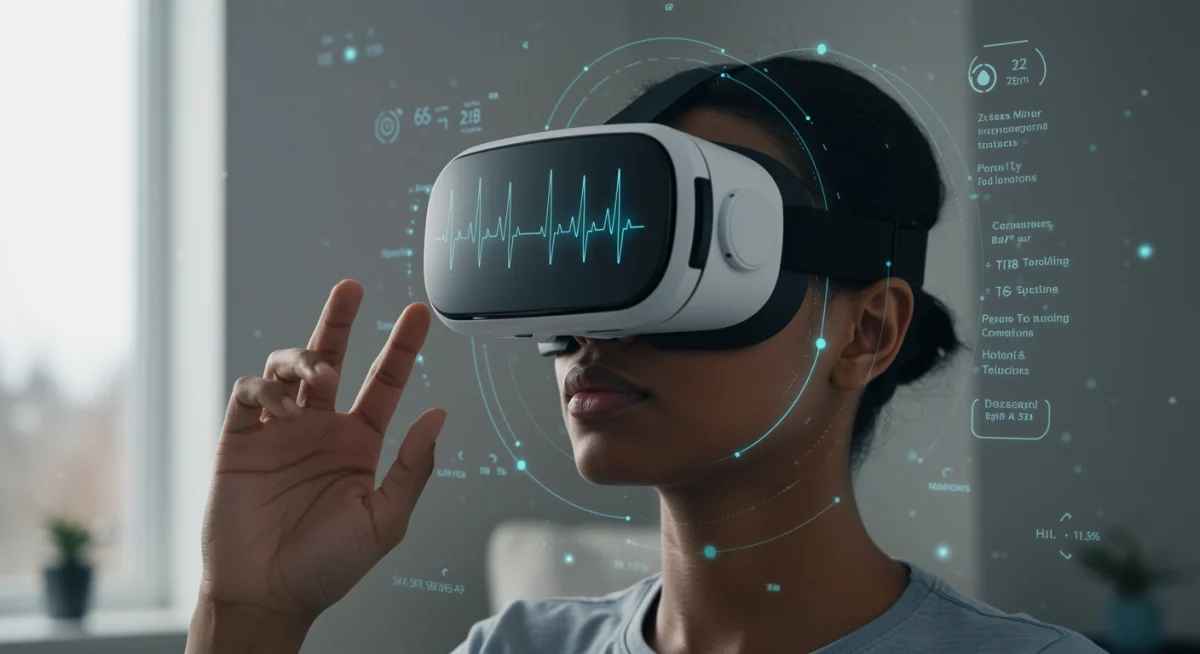
Virtual Reality (VR) is emerging as a powerful tool in mental health, offering immersive experiences that can simulate therapeutic environments and scenarios. By 2026, VR-based therapies are no longer niche experiments but recognized and increasingly utilized interventions for a range of conditions, from anxiety and phobias to PTSD and social anxiety.
The power of VR lies in its ability to create controlled, realistic, and safe environments where individuals can confront their fears, practice social skills, or engage in mindfulness exercises. This experiential learning can be far more impactful than traditional talk therapy alone, providing a safe space for exposure and desensitization.
Controlled Exposure and Skill Building
For conditions like phobias or PTSD, VR offers a unique advantage: controlled exposure therapy. Patients can gradually confront their triggers in a virtual environment, allowing them to build coping mechanisms and reduce their anxiety response without the risks associated with real-world exposure.
- Phobia Treatment: Individuals with specific phobias (e.g., fear of heights, public speaking) can experience these situations virtually, slowly increasing the intensity as they become more comfortable.
- Social Skills Training: VR simulations can create social scenarios for individuals with social anxiety or autism spectrum disorder, allowing them to practice interactions and develop communication skills in a low-stakes environment.
- Trauma Processing: For PTSD, VR can be used to re-create safe, therapeutic versions of traumatic events, helping individuals process memories and reduce their emotional impact under the guidance of a therapist.
Beyond exposure, VR also facilitates skill-building, such as mindfulness and relaxation techniques. Immersive virtual environments can transport users to serene landscapes, guiding them through meditation exercises that enhance their ability to manage stress and cultivate inner calm. This innovative approach promises to make therapy more engaging and effective for many.
Integrating Wearable Technology for Holistic Monitoring
The synergy between wellness tech and mental health extends significantly into wearable technology. By 2026, smartwatches, rings, and other biometric sensors are more sophisticated, offering continuous, passive monitoring of physiological indicators that correlate with mental states. This integration provides a holistic view of an individual’s well-being, moving beyond subjective self-reporting.
These devices track heart rate variability, sleep patterns, skin conductance, and even subtle changes in voice tone, feeding this data into AI algorithms. The insights gained from this continuous monitoring can alert users or their clinicians to potential stress, anxiety, or depressive episodes, enabling proactive management rather than reactive crisis intervention.
Biometric Feedback for Self-Regulation
Wearable technology empowers individuals with real-time biometric feedback, helping them understand their body’s responses to stress and emotional triggers. This awareness is a crucial step towards developing self-regulation skills and adopting healthier coping mechanisms.
- Stress Detection: Algorithms analyze physiological data to identify elevated stress levels, prompting users to engage in relaxation techniques or take breaks.
- Sleep Optimization: Detailed sleep tracking helps identify patterns linked to mental health, offering personalized recommendations for improving sleep hygiene, a critical component of mental wellness.
- Emotional Regulation Training: Some wearables integrate with apps that provide biofeedback exercises, guiding users to control their physiological responses (e.g., breathing exercises to lower heart rate) in real-time.
The passive nature of wearable monitoring reduces the burden on users to actively log their symptoms, providing a more accurate and less intrusive picture of their mental state. This constant stream of data, when interpreted by intelligent systems, creates a powerful feedback loop that supports both self-management and clinical decision-making.
Ethical Considerations and Data Privacy in Wellness Tech
As the wellness tech mental health boom accelerates, so too do the ethical considerations surrounding data privacy, algorithmic bias, and the responsible deployment of these powerful tools. By 2026, robust frameworks and regulations are critical to ensure that technological advancements serve humanity without compromising fundamental rights or exacerbating existing inequalities.
The sensitive nature of mental health data demands the highest standards of encryption, anonymization, and user consent. Developers and policymakers must collaborate to establish transparent practices. This ensures that individuals retain control over their personal information and that their trust in these innovative solutions is maintained.
Addressing Algorithmic Bias and Equity
A significant ethical challenge lies in preventing and mitigating algorithmic bias. If AI systems are trained on unrepresentative datasets, they risk perpetuating or even amplifying existing disparities in mental healthcare access and outcomes, particularly for marginalized communities.
- Diverse Data Sets: Ensuring AI models are trained on diverse and inclusive datasets is paramount to developing equitable and unbiased diagnostic and therapeutic tools.
- Transparency and Auditability: Algorithms should be transparent and auditable, allowing experts to scrutinize their decision-making processes and identify potential biases.
- Accessibility for All: Efforts must be made to ensure that these cutting-edge technologies are accessible to all socioeconomic groups, not just those who can afford premium devices or subscriptions.
Beyond technical safeguards, a strong ethical compass is required to guide the development and implementation of wellness tech. This includes ongoing dialogue with users, mental health professionals, and ethicists to continually refine practices and ensure that technology remains a tool for empowerment and healing, not control or exploitation.
The Future Landscape: A Blended Care Model
The 2026 wellness tech boom is not poised to replace human therapists but rather to augment and enhance their capabilities, leading to a blended care model. This integrated approach combines the empathy and expertise of human professionals with the scalability, data-driven insights, and accessibility offered by technology. It represents the most promising pathway to a more comprehensive and effective mental healthcare system.
In this future, technology acts as a force multiplier, extending the reach of clinicians, providing tools for continuous monitoring, and empowering individuals with self-management strategies. The focus shifts from episodic treatment to continuous, preventative care, creating a more resilient and responsive mental health infrastructure.
Synergy Between Human and Machine
The ideal scenario involves a seamless interplay between human therapists and technological interventions. AI can handle routine tasks, data analysis, and initial screenings, freeing up therapists to focus on complex cases, build therapeutic relationships, and provide the nuanced support that only a human can offer.
- Therapist-Assisted DTx: Digital therapeutics can be prescribed and monitored by therapists, who then use the data to inform their in-person or telehealth sessions.
- AI-Enhanced Clinical Decision Support: AI tools can provide therapists with valuable insights into patient progress, treatment effectiveness, and potential risks, aiding in more informed decision-making.
- Expanded Access to Specialized Care: Telehealth platforms, often powered by advanced tech, can connect patients in underserved areas with specialists, overcoming geographical barriers to care.
This blended care model promises to democratize mental health support, making it more flexible, responsive, and tailored to the diverse needs of the population. By embracing technology thoughtfully and ethically, the US stands on the precipice of a new era of mental wellness, where support is not just available, but truly integrated into daily life.
| Key Innovation | Impact on Mental Health Support |
|---|---|
| AI Diagnostics | Enables early detection and precise identification of mental health conditions through complex data analysis and predictive analytics. |
| Digital Therapeutics (DTx) | Offers personalized, evidence-based interventions via software, improving accessibility and tailored treatment plans. |
| Virtual Reality (VR) Therapy | Provides immersive, controlled environments for experiential therapy, effective for phobias, PTSD, and social anxiety. |
| Wearable Tech Integration | Facilitates continuous, passive monitoring of physiological indicators for proactive mental health management and self-regulation. |
Frequently Asked Questions About Wellness Tech and Mental Health
AI enhances mental health diagnosis by analyzing vast amounts of data, including linguistic patterns, physiological markers, and patient records, to identify subtle indicators of conditions. This allows for earlier detection and more precise diagnostic insights, reducing misdiagnosis and enabling timely interventions. It also helps in predicting risks before severe symptoms emerge.
Digital therapeutics (DTx) are evidence-based software programs designed to treat or manage medical conditions, including mental health disorders. They deliver personalized interventions like CBT modules directly through devices, adapting to user progress. DTx are clinically validated and often prescribed, offering accessible, on-demand support that complements traditional therapy.
Virtual reality (VR) therapy is not intended to fully replace traditional therapy but rather to augment and enhance it. VR provides immersive, controlled environments for experiential therapy, particularly effective for phobias, PTSD, and social anxiety. It offers a safe space for exposure and skill-building that complements the insights and guidance of a human therapist in a blended care model.
Wearable technology contributes to mental wellness by continuously monitoring physiological indicators like heart rate, sleep patterns, and stress levels. This passive data collection provides insights into an individual’s mental state, enabling proactive management and self-regulation. It helps users understand their body’s responses to stress and can alert them to potential issues, supporting overall well-being.
Ethical concerns surrounding wellness tech for mental health primarily revolve around data privacy, algorithmic bias, and equitable access. Ensuring robust encryption, anonymization, and transparent user consent for sensitive mental health data is crucial. Additionally, addressing algorithmic bias in AI models and ensuring these technologies are accessible to all socioeconomic groups are vital for responsible and ethical deployment.
Conclusion
The 2026 wellness tech boom is unequivocally transforming the landscape of mental health support in the US. Through the synergistic advancements in AI-powered diagnostics, personalized digital therapeutics, and immersive virtual reality experiences, we are witnessing a profound shift towards more accessible, effective, and tailored care. These innovations, while promising, necessitate careful consideration of ethical implications and data privacy to ensure equitable benefits for all. The future of mental wellness lies in a blended care model, where technology empowers both individuals and clinicians, fostering a more proactive and integrated approach to mental health.