The 2026 No Surprises Act: Protecting Consumers from Unexpected Medical Bills

The 2026 No Surprises Act significantly enhances consumer protection by targeting unexpected medical bills, ensuring greater transparency and financial predictability in healthcare services across the United States.
Have you ever received a medical bill that left you scratching your head, wondering how a simple procedure could cost so much? You are not alone. Unexpected medical bills have been a persistent source of financial stress for countless Americans. This challenge is precisely what the updated 2026 No Surprises Act aims to tackle, offering vital protections against these unforeseen charges and bringing much-needed clarity to healthcare costs.
Understanding the Genesis of Surprise Medical Bills
Surprise medical bills, often referred to as balance billing, typically occur when a patient receives care from an out-of-network provider or facility without their knowledge or consent, particularly in emergency situations. For years, patients found themselves caught in the middle, responsible for the difference between what their insurer paid and what the out-of-network provider charged. This often led to exorbitant costs and significant financial hardship.
The complexity of the U.S. healthcare system, with its intricate web of insurance networks, provider contracts, and billing practices, has historically created fertile ground for these unexpected charges. Even when a patient diligently chooses an in-network hospital, they might unknowingly receive care from an out-of-network anesthesiologist, radiologist, or assistant surgeon. These situations, often unavoidable in an emergency, left consumers vulnerable to substantial bills they had no power to negotiate or foresee.
These practices not only burdened individuals but also undermined trust in the healthcare system. Patients became hesitant to seek necessary care, fearing the financial aftermath. The legislative response, culminating in the No Surprises Act, was a direct answer to these widespread consumer complaints and a recognition of the urgent need for systemic change. It represents a significant step towards ensuring that patients are shielded from the financial fallout of situations beyond their control.
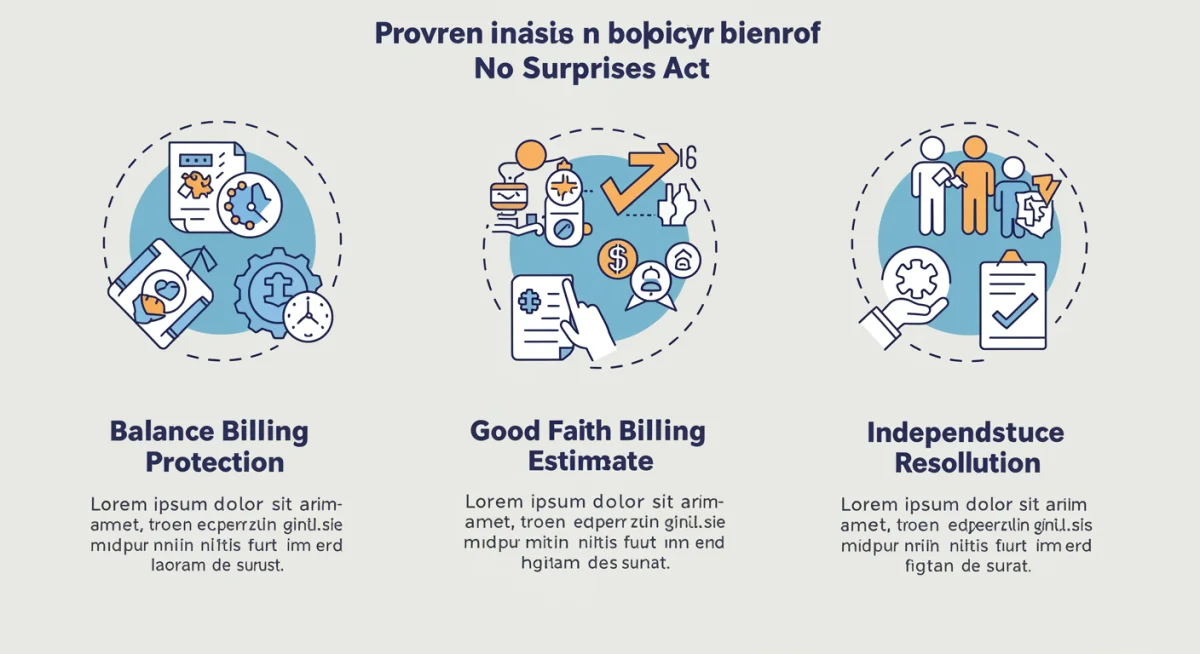
Key Policy Provision 1: Protection Against Balance Billing
One of the cornerstone protections introduced by the 2026 No Surprises Act is the comprehensive guard against balance billing. This provision is designed to shield consumers from receiving unexpected charges when they receive emergency care or non-emergency care from out-of-network providers at in-network facilities. It fundamentally alters the financial landscape for millions of Americans seeking medical attention.
Prior to this act, if you visited an in-network hospital but were treated by an out-of-network physician, like an emergency room doctor or an anesthesiologist, that physician could send you a separate bill for the difference between their charge and what your insurance paid. This practice, known as balance billing, is now largely prohibited under specific circumstances. The Act ensures that patients are only responsible for their in-network cost-sharing amounts, such as co-pays, co-insurance, or deductibles, regardless of the provider’s network status in these situations.
Emergency Services Protection
For emergency services, whether provided in a hospital emergency department or a freestanding emergency room, the Act mandates that patients cannot be balance billed. This protection applies even if the facility or the providers are out-of-network. It ensures that individuals can seek urgent care without the fear of a crippling bill afterward.
- All emergency services must be treated as in-network services by health plans.
- Patient cost-sharing is limited to the in-network amount.
- Applies to emergency facilities and emergency medicine providers.
Non-Emergency Services at In-Network Facilities
The Act also extends its protection to non-emergency services. If you go to an in-network hospital or ambulatory surgical center for a scheduled procedure, and you receive care from an out-of-network provider (e.g., an assistant surgeon or pathologist) who you did not choose, you cannot be balance billed. This closes a significant loophole that previously exposed patients to surprise charges for services they often had no control over selecting.
- Protects against out-of-network charges for ancillary services.
- Requires facilities to notify patients about potential out-of-network providers.
- Patients must provide explicit consent to waive protections under specific conditions.
In essence, this provision shifts the burden of negotiation from the patient to the providers and insurers. Instead of patients being caught in the middle, the Act establishes a process for health plans and providers to determine appropriate payment for these out-of-network services, ensuring that consumers are shielded from the financial impact of these disputes. This brings a much-needed layer of financial security to healthcare consumers.
Key Policy Provision 2: Good Faith Estimates for Scheduled Services
A crucial element of the 2026 No Surprises Act is the requirement for healthcare providers and facilities to furnish patients with a “good faith estimate” of expected charges for scheduled services. This provision introduces an unprecedented level of transparency to healthcare costs, empowering consumers to make more informed decisions and anticipate their financial responsibilities before receiving non-emergency care.
Historically, obtaining a clear, upfront estimate of medical costs has been notoriously difficult. Patients often proceeded with procedures or appointments having only a vague idea of the total expense, leading to shock when the final bill arrived. The good faith estimate aims to rectify this by providing a detailed breakdown of anticipated charges for services, including those from other providers involved in the same episode of care.
What the Good Faith Estimate Includes
When you schedule a non-emergency service, your provider or facility is now required to give you a good faith estimate. This estimate must include not only the direct costs from the scheduling provider but also those from any co-providers or co-facilities that are reasonably expected to be involved in your care. This comprehensive view helps eliminate surprises from ancillary services.
- Detailed list of medical services and items.
- Diagnosis codes and service codes.
- Estimated costs from all providers involved in the care.
- Must be provided within specific timeframes.
Patient Rights and Discrepancies
The good faith estimate is more than just an informational document; it’s a tool for patient protection. If the actual billed amount for a service substantially exceeds the good faith estimate (typically by $400 or more), patients have the right to dispute the charge. This mechanism provides a clear avenue for recourse if providers fail to accurately estimate costs, holding them accountable for their projections.
- Patients can initiate a patient-provider dispute resolution process.
- The dispute resolution involves an independent third party.
- Applies to uninsured and self-pay individuals primarily.
This provision marks a significant shift towards consumer-centric healthcare. By placing the responsibility on providers to offer transparent pricing upfront, the Act enables patients to budget for their healthcare expenses, compare costs, and challenge unexpected charges effectively. It’s a proactive measure designed to prevent the financial distress caused by opaque billing practices.
Key Policy Provision 3: Independent Dispute Resolution Process
The third critical policy provision within the 2026 No Surprises Act is the establishment of an Independent Dispute Resolution (IDR) process. This mechanism is designed to resolve payment disputes between healthcare providers and health plans when they cannot agree on the appropriate reimbursement for out-of-network services protected under the Act. Crucially, the IDR process operates without involving the patient in the financial wrangling.
Before the Act, when a patient received a surprise bill, they were often left to mediate between their insurer and the out-of-network provider, a daunting and often unsuccessful task. The IDR process removes the patient from this negotiation, ensuring that their financial liability remains limited to their in-network cost-sharing, regardless of the outcome of the dispute.
How the IDR Process Works
When a health plan and an out-of-network provider cannot agree on the payment for a service covered by the No Surprises Act, either party can initiate the IDR process. An independent third-party arbitrator reviews offers from both the health plan and the provider, selecting one of the offers as the final payment amount. This “baseball-style” arbitration encourages both parties to submit reasonable offers, as the arbitrator must choose one of them without modification.
- Either party (provider or plan) can initiate IDR.
- An independent arbitrator reviews offers from both sides.
- The arbitrator considers factors like market rates and complexity of care.
- The decision is binding on both parties.
Factors Considered in Arbitration
The independent arbitrator considers several factors when making a decision, with a strong emphasis on the qualifying payment amount (QPA). The QPA is generally the median of the contracted rates for the same or similar service in the same or similar geographic area. Other factors may include the provider’s training and experience, the complexity of the service, and the patient’s acuity. However, factors like usual and customary charges and billed charges are explicitly excluded from consideration, preventing inflated pricing from influencing the outcome.
- Qualifying Payment Amount (QPA) is a primary consideration.
- Patient acuity and complexity of services are also weighed.
- Provider’s market share or billed charges are not considered.
The IDR process is vital because it provides a structured, impartial method for resolving billing disagreements between payers and providers. By doing so, it ensures that patients are not subjected to the financial uncertainty of these disputes, reinforcing the Act’s core mission of consumer protection against surprise medical bills. It creates a fair playing field for payment negotiations, ultimately benefiting the patient.
Navigating the New Landscape: What Consumers Should Know
With the 2026 No Surprises Act in full effect, consumers have powerful new protections, but understanding how to leverage them is key. Being an informed patient can significantly reduce the likelihood of encountering unexpected medical bills. It’s about proactive engagement with your healthcare providers and insurance company, and knowing your rights under the law.
While the Act does much to shield patients automatically, there are still steps you can take to ensure you benefit fully from its provisions. The healthcare system remains complex, and vigilance on the part of the consumer can prevent many potential headaches. Knowledge is your best defense against financial surprises in your medical journey.
Before Scheduled Services
Always ask your provider for a good faith estimate before receiving non-emergency care. This is your right under the Act. Review it carefully and compare it with any information you receive from your health plan. If you are uninsured or self-pay, this estimate is particularly crucial. Don’t hesitate to ask questions if anything is unclear or if the estimate seems unusually high. Documenting these interactions can be helpful if a dispute arises later.
- Request a good faith estimate for all scheduled non-emergency services.
- Verify that all expected providers are listed on the estimate.
- Compare the estimate with your insurance benefits and deductible.
During Emergency Situations
In an emergency, your primary focus should be on receiving care, not on network status. The Act protects you from balance billing in these scenarios, regardless of where you receive care or who treats you. However, it’s always a good idea, when feasible, to inform the facility of your insurance information. Make sure you understand that any follow-up care that is non-emergency might not fall under the same protections if you choose an out-of-network provider knowingly.
- Focus on getting care; balance billing is prohibited for emergency services.
- Provide insurance information if you can.
- Be aware that non-emergency follow-up care may require network verification.
By staying informed and actively engaging with your providers and insurers, you can confidently navigate the healthcare system under the new protections of the No Surprises Act. This proactive approach ensures you receive the care you need without the added stress of unexpected financial burdens, fostering greater peace of mind.
Impact on Healthcare Providers and Insurers
The 2026 No Surprises Act doesn’t just empower consumers; it also significantly reshapes how healthcare providers and insurers operate and interact. The legislation mandates new responsibilities, introduces complex negotiation processes, and requires greater transparency, fundamentally altering established business models and billing practices across the industry. This shift demands adaptation and strategic adjustments from all stakeholders.
For years, providers often had the upper hand in billing out-of-network patients, and insurers sometimes benefited from complex network structures. The Act aims to rebalance this dynamic, pushing both parties towards more transparent and equitable practices. Understanding these impacts is crucial for appreciating the full scope of the legislation’s reach and its long-term implications for the healthcare ecosystem.
New Responsibilities for Providers
Providers are now tasked with providing good faith estimates to uninsured and self-pay patients, and in some cases, to insured patients for non-covered services. They must also ensure that patients are not balance billed for emergency services or for out-of-network care at in-network facilities. This requires significant changes to billing systems, staff training, and internal compliance protocols. Adapting to these requirements can be a substantial operational challenge, especially for smaller practices.
- Implement systems for generating accurate good faith estimates.
- Educate billing staff on new balance billing prohibitions.
- Review and update existing patient consent forms and disclosures.
Adjustments for Health Plans
Health plans now bear the responsibility of paying out-of-network providers for protected services at a rate determined by the IDR process or through direct negotiation, without passing surprise bills to the patient. This necessitates robust internal processes for calculating the qualifying payment amount (QPA) and engaging in the IDR process. Insurers must also enhance their communication with members regarding these new protections.
- Develop robust systems for calculating and applying the Qualifying Payment Amount (QPA).
- Train personnel on the Independent Dispute Resolution (IDR) process.
- Improve member communication regarding surprise billing protections.
The Act encourages providers and insurers to work together more collaboratively to resolve payment disputes, ideally through direct negotiation, before resorting to the IDR process. While the transition may present challenges, the long-term goal is a more transparent and consumer-friendly healthcare billing environment. This regulatory push aims to foster greater efficiency and fairness within the system.
The Broader Implications for Healthcare Transparency
Beyond the immediate protections against surprise bills, the 2026 No Surprises Act carries significant broader implications for healthcare transparency across the United States. By mandating good faith estimates and standardizing dispute resolution, the Act is pushing the entire industry towards a more open and understandable pricing structure. This cultural shift could have lasting effects on how consumers engage with and pay for their medical care.
Increased transparency is not just about avoiding unexpected costs; it’s about empowering patients to become more active participants in their healthcare decisions. When costs are clearer, individuals can weigh their options more effectively, choose providers based on value, and potentially even negotiate services. This represents a fundamental change from a system often shrouded in financial ambiguity.
Empowering Consumer Choice
With clearer price estimates available upfront, consumers are better equipped to shop for healthcare services. While emergencies will always be unpredictable, for elective procedures and routine care, patients can compare good faith estimates from different providers or facilities. This newfound ability to compare costs introduces an element of market competition that was largely absent when pricing was opaque.
- Patients can compare estimated costs for non-emergency services.
- Informed choices can lead to more cost-effective healthcare decisions.
- Greater transparency fosters a more competitive healthcare market.
Fostering Accountability
The Act holds both providers and insurers to a higher standard of financial clarity and fairness. Providers must be more diligent in their billing practices and in coordinating with other providers involved in a patient’s care. Insurers must ensure their networks are adequate and that they process claims for out-of-network services fairly. This increased accountability encourages better practices across the board, reducing the likelihood of disputes and improving overall patient experience.
- Providers are incentivized to offer accurate estimates.
- Insurers must adhere to fair payment practices for out-of-network claims.
- The IDR process promotes reasonable offers from both parties.
Ultimately, the 2026 No Surprises Act is a powerful catalyst for change, moving the U.S. healthcare system towards greater clarity, fairness, and consumer empowerment. Its provisions are designed not only to fix immediate problems but also to lay the groundwork for a more transparent and trustworthy healthcare environment for everyone.
| Key Provision | Brief Description |
|---|---|
| Balance Billing Protection | Shields consumers from unexpected bills for emergency services and non-emergency care from out-of-network providers at in-network facilities. |
| Good Faith Estimates | Requires providers to give uninsured/self-pay patients an upfront estimate of costs for scheduled non-emergency services. |
| Independent Dispute Resolution (IDR) | Establishes a process for providers and insurers to resolve payment disputes for out-of-network services, without involving the patient. |
Frequently Asked Questions About the No Surprises Act
A surprise medical bill, or balance bill, is an unexpected charge from an out-of-network provider or facility. This often happens when you receive emergency care or treatment from an out-of-network provider at an in-network hospital, without your prior knowledge or consent.
No, the Act primarily covers emergency services, and non-emergency services provided by out-of-network professionals at in-network facilities. It also applies to air ambulance services. Ground ambulance services are not currently covered, but some states have their own protections.
For uninsured or self-pay individuals, the Act requires providers to give a good faith estimate of expected charges for scheduled services. If the final bill is substantially higher than the estimate, these individuals have the right to dispute the charges through a patient-provider dispute resolution process.
Yes, you can, but under specific circumstances, you might be asked to sign a waiver. If you knowingly choose an out-of-network provider for non-emergency services, you may waive your protections against balance billing. Always understand what you are signing before consenting.
If you believe you’ve received a surprise bill for a service covered by the Act, contact your health plan and the provider immediately. You can also file a complaint with the Department of Health and Human Services (HHS) or your state’s insurance department.
Conclusion
The 2026 No Surprises Act represents a monumental step forward in safeguarding consumers from the financial unpredictability of healthcare. By implementing robust protections against balance billing, mandating transparent good faith estimates, and establishing an independent dispute resolution process, the Act empowers patients and holds the healthcare industry to a higher standard of accountability. While navigating the healthcare system will always require diligence, these provisions offer a crucial layer of security, ensuring that Americans can seek necessary medical care without the lingering fear of devastating, unexpected costs. Understanding and utilizing these new rights will be key to a more financially secure healthcare experience for everyone.