Cancer Screening 2026: Top 3 Technologies Compared
The ongoing evolution of cancer screening technologies promises enhanced early detection and improved patient outcomes, with specific advancements in liquid biopsies, AI-powered imaging, and multi-omics integration shaping the landscape for 2026.
In the relentless fight against cancer, early detection remains our most potent weapon. As we approach 2026, the landscape of diagnostic medicine is undergoing a profound transformation, driven by innovative technologies that promise to revolutionize how we identify and treat this complex disease. This article delves into the crucial advancements in cancer screening 2026, offering a comprehensive comparison of three leading technologies poised to significantly impact preventative care in the United States.
The imperative of early detection in cancer care
The significance of detecting cancer at its earliest stages cannot be overstated. Patients diagnosed with localized cancer often have significantly higher survival rates compared to those whose cancer has spread. This fundamental principle drives continuous research and development into more sensitive, specific, and accessible screening methods, aiming to catch the disease before it becomes advanced and more challenging to treat.
Early detection not only improves prognosis but also allows for less aggressive treatments, reducing side effects and improving overall quality of life for patients. The economic burden on healthcare systems is also lessened when cancers are found and treated early, avoiding costly and complex interventions associated with advanced disease. This holistic benefit underscores why advancements in screening technologies are so critical for public health.
The evolving paradigm of cancer screening
- Traditional vs. Modern Screening: Moving beyond conventional methods like mammograms and colonoscopies, which primarily detect established tumors, modern screening aims to identify pre-cancerous conditions or even molecular markers of disease before any physical symptoms appear.
- Personalized Approaches: Future screening strategies are increasingly tailored to individual risk factors, genetic predispositions, and lifestyle, moving away from a one-size-fits-all approach.
- Accessibility and Equity: Efforts are being made to ensure that advanced screening technologies are not only effective but also equitably accessible across diverse populations, addressing disparities in healthcare.
The pursuit of early detection is a dynamic field, constantly integrating new scientific discoveries with engineering marvels. Understanding these shifts is key to appreciating the potential impact of the technologies we will explore, each bringing its unique strengths to the table in the ongoing battle against cancer.
Liquid biopsy: a non-invasive revolution
Liquid biopsy represents one of the most exciting frontiers in cancer diagnostics. This innovative technique involves analyzing biological fluids, most commonly blood, for cancer-related biomarkers such as circulating tumor DNA (ctDNA), circulating tumor cells (CTCs), and exosomes. Unlike traditional tissue biopsies, which are invasive and often require surgical procedures, liquid biopsies offer a non-invasive alternative with significant advantages.
The ability to detect cancer from a simple blood draw opens up new possibilities for screening, monitoring treatment response, and detecting recurrence with unprecedented ease and frequency. By identifying genetic mutations or epigenetic changes shed by tumors into the bloodstream, liquid biopsies can potentially detect cancer much earlier than conventional imaging or symptom-based diagnostics.
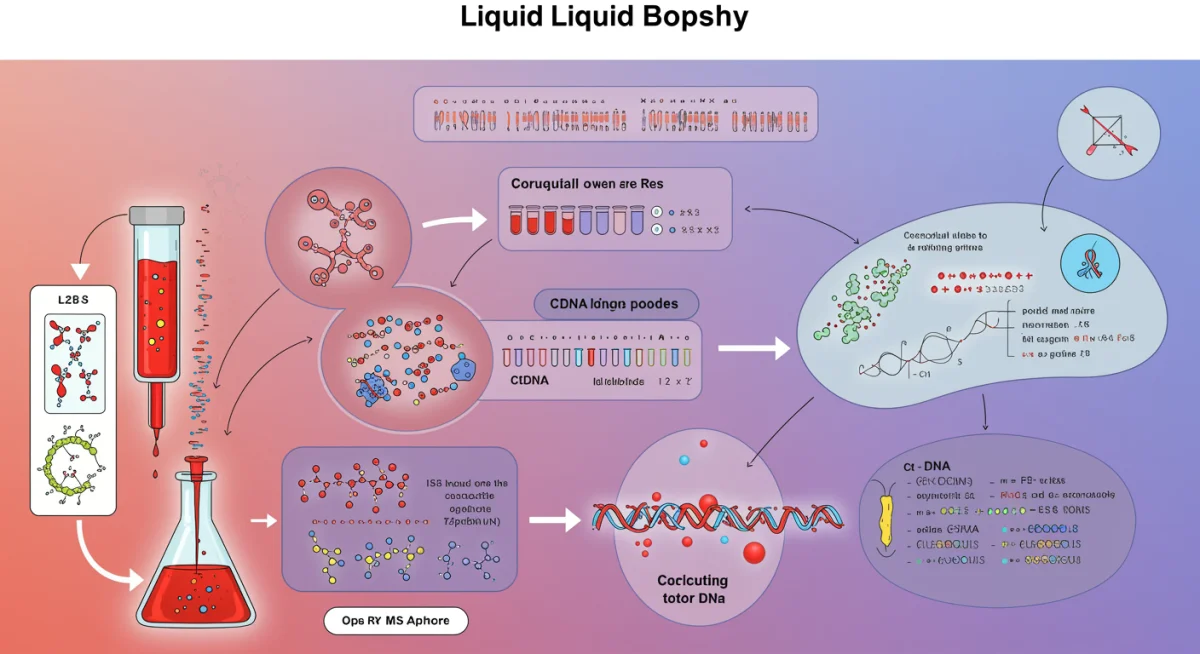
For 2026, advancements in sensitivity and specificity are making liquid biopsies increasingly reliable for a broader range of cancers. Researchers are refining methods to distinguish tumor-derived DNA from healthy cellular DNA, reducing false positives and increasing diagnostic accuracy. This precision is vital for widespread adoption in routine clinical practice.
Key advantages and challenges of liquid biopsy
- Non-invasiveness: Reduces patient discomfort and risks associated with surgical biopsies.
- Early Detection Potential: Can detect cancer at very early stages, sometimes before symptoms appear.
- Monitoring and Recurrence: Ideal for tracking treatment effectiveness and identifying cancer recurrence without repeated invasive procedures.
- Challenges: Current limitations include varying sensitivity across different cancer types and stages, as well as the need for further standardization of laboratory protocols.
The promise of liquid biopsy extends beyond just screening. It holds potential for guiding personalized treatment decisions by identifying specific mutations that can be targeted by certain therapies. As technology progresses, its role in comprehensive cancer management is expected to grow exponentially, solidifying its place as a cornerstone of future preventative care.
AI-powered medical imaging: enhancing diagnostic precision
Artificial intelligence (AI) is rapidly transforming medical imaging, bringing unparalleled precision and efficiency to cancer detection. For 2026, AI algorithms are becoming indispensable tools for radiologists and oncologists, capable of analyzing vast amounts of image data from modalities like MRI, CT, mammography, and pathology slides with remarkable speed and accuracy. These systems can identify subtle patterns and anomalies that might be missed by the human eye, thereby improving the chances of early diagnosis.
AI’s strength lies in its ability to learn from enormous datasets of medical images, correlating specific visual features with cancer presence, type, and even aggressiveness. This machine learning capability allows AI to act as a highly sophisticated second opinion, flagging suspicious areas for further review by human experts. The integration of AI into imaging workflows is not about replacing human expertise but augmenting it, making diagnostics more robust and less prone to variability.
One significant area of impact for AI in imaging is in reducing false negatives and false positives, which can lead to unnecessary follow-up procedures or delayed diagnoses. By optimizing image quality and interpretation, AI contributes to a more streamlined and patient-friendly screening process. Furthermore, AI can help prioritize urgent cases, ensuring that patients with high-risk findings receive prompt attention.
Applications and future outlook for AI imaging
- Enhanced Detection: AI can detect minute lesions or changes in tissue density indicative of early-stage cancer, especially in complex images like dense breast tissue mammograms or intricate lung scans.
- Workflow Efficiency: Automates routine tasks, allowing radiologists to focus on more complex cases and reducing diagnostic turnaround times.
- Prognostic Information: Some AI models can predict cancer aggressiveness or patient response to treatment based on imaging features, offering valuable prognostic insights.
- Challenges: Requires large, diverse, and well-annotated datasets for training, and ensuring transparency and interpretability of AI decisions remains crucial for clinical adoption.
The continuous development of AI in medical imaging promises a future where diagnostic errors are minimized, and early detection becomes a more consistent reality. Its ability to process and interpret visual data at a scale impossible for humans positions it as a vital component in the advanced cancer screening toolkit of 2026.
Multi-omics integration: a holistic view of cancer
Multi-omics integration represents a paradigm shift in understanding cancer, moving beyond single-layer analyses to combine data from genomics, proteomics, metabolomics, and epigenomics. This holistic approach provides an unprecedentedly comprehensive view of an individual’s biological state, allowing for the identification of complex biomarkers and pathways associated with cancer development and progression. For 2026, the ability to integrate and interpret these diverse data types is becoming increasingly sophisticated, offering a highly personalized approach to early detection.
By analyzing an individual’s entire biological blueprint – from their genetic predispositions (genomics) to the proteins expressed in their cells (proteomics), their metabolic profiles (metabolomics), and how their genes are regulated (epigenomics) – multi-omics can uncover subtle signatures of cancer that might be missed by single-omic approaches. This integrated data provides a much richer context, allowing for earlier and more accurate risk assessment and disease detection.
The power of multi-omics lies in its capacity to identify patterns across different biological levels. For instance, a particular genetic mutation might lead to a specific protein expression pattern, which in turn influences certain metabolic pathways. By connecting these dots, scientists can build more robust predictive models for cancer risk and develop highly targeted screening strategies. This level of biological detail moves us closer to true precision medicine.
Benefits and complexities of multi-omics
- Comprehensive Risk Assessment: Provides a detailed understanding of an individual’s cancer risk by integrating multiple biological layers.
- Novel Biomarker Discovery: Facilitates the identification of new and more specific biomarkers for early cancer detection.
- Personalized Screening: Enables highly individualized screening recommendations based on a unique multi-omic profile.
- Challenges: The sheer volume and complexity of multi-omic data require advanced bioinformatics and computational tools for analysis, and data interpretation remains a significant hurdle.
The integration of multi-omics data is not just about collecting more information; it’s about making sense of it in a way that translates into actionable clinical insights. As computational tools and AI algorithms evolve to handle this complexity, multi-omics is poised to become a cornerstone of highly personalized and proactive cancer screening 2026 strategies, offering a truly holistic perspective on health and disease.
Comparing the leading technologies for 2026
When evaluating liquid biopsies, AI-powered imaging, and multi-omics integration, it’s clear that each technology brings distinct advantages to the table for cancer screening 2026. While they operate on different principles, their potential impact on early detection is uniformly significant. Understanding their comparative strengths helps us appreciate the evolving landscape of preventative care.
Liquid biopsies excel in their non-invasiveness and potential for frequent monitoring, making them ideal for high-risk individuals or for tracking treatment efficacy. They offer a convenient way to detect minimal residual disease or early recurrence, often before it becomes clinically apparent. However, their current sensitivity can vary, and distinguishing tumor-derived signals from normal biological noise remains a challenge that researchers are actively addressing.
AI-powered imaging, on the other hand, dramatically enhances the diagnostic capabilities of traditional imaging modalities. It improves the accuracy and efficiency of interpreting scans, reducing human error and identifying subtle anomalies. Its strength lies in its visual pattern recognition and ability to process vast amounts of data quickly. While highly effective for established tumors or pre-cancerous lesions visible on scans, it relies on physical changes that might occur later than molecular markers.
Multi-omics integration offers the most comprehensive, holistic view, combining genetic, protein, and metabolic data to predict risk and detect disease at its earliest molecular stages. Its power lies in personalization and its ability to uncover complex biological signatures. However, it is also the most computationally intensive and complex approach, requiring sophisticated analytical tools and expertise to translate data into actionable clinical insights. The integration of these layers is still an area of active development, but its promise for truly personalized preventative medicine is immense.
Synergy and complementary roles
It is important to note that these technologies are not mutually exclusive; in fact, they are highly complementary. A future screening strategy might involve a multi-omics risk assessment to identify high-risk individuals, followed by regular liquid biopsies for molecular surveillance, and AI-enhanced imaging for precise localization of any suspicious findings. This synergistic approach maximizes the power of each technology to create a robust, multi-layered defense against cancer.
The combination of these advanced tools promises a future where early detection is not just improved but transformed, offering individuals a better chance at long, healthy lives. Their collective potential to redefine preventative care is a testament to ongoing scientific innovation in the field of oncology.
The future of preventative cancer care in the US
The advancements in liquid biopsies, AI-powered medical imaging, and multi-omics integration are collectively shaping a transformative future for preventative cancer care in the United States. For 2026 and beyond, we can anticipate a healthcare system increasingly focused on proactive, personalized, and accessible screening strategies. This shift will move away from reactive treatment and towards early intervention, significantly improving public health outcomes and reducing the burden of advanced cancer.
One of the most significant changes will be the widespread adoption of personalized screening protocols. Instead of generic guidelines, individuals will receive recommendations based on their unique genetic profile, lifestyle, and specific risk factors identified through multi-omics analysis. This tailored approach will ensure that the right screening methods are applied to the right individuals at the right time, maximizing efficacy and minimizing unnecessary procedures.
Accessibility will also be a key focus. As technologies mature and become more cost-effective, efforts will be made to integrate them into routine primary care, making advanced screening available to a broader population. This includes leveraging telehealth and remote diagnostic capabilities, especially for liquid biopsies, to overcome geographical barriers and reach underserved communities. The goal is to democratize access to cutting-edge preventative tools.
Anticipated impacts and ethical considerations
- Improved Survival Rates: Earlier detection across a wider range of cancers is expected to lead to a significant increase in overall survival rates.
- Reduced Treatment Burden: Detecting cancer at earlier stages often allows for less invasive and less toxic treatments, improving patient quality of life.
- Ethical Debates: The increasing amount of personal genetic and biological data will necessitate robust discussions around data privacy, informed consent, and equitable access to advanced technologies.
- Healthcare System Adaptation: Healthcare providers and systems will need to adapt to these new technologies, including training medical professionals and developing new clinical pathways.
The future of preventative cancer care in the US is bright, characterized by innovation and a deep commitment to early detection. These technologies, individually and collectively, hold the promise of a future where cancer is diagnosed earlier, treated more effectively, and ultimately, where more lives are saved. The journey towards this future is complex, but the trajectory is clear: a healthier, more proactive approach to cancer management is on the horizon.
| Technology | Key Benefit for Early Detection |
|---|---|
| Liquid Biopsy | Non-invasive detection of ctDNA, CTCs for early diagnosis and monitoring. |
| AI-Powered Imaging | Enhanced accuracy and efficiency in interpreting medical scans for subtle anomalies. |
| Multi-omics Integration | Holistic analysis of genetic, protein, and metabolic data for personalized risk assessment. |
| Synergistic Approach | Combining technologies for a more robust and comprehensive early detection strategy. |
Frequently asked questions about cancer screening in 2026
The primary benefit of liquid biopsies is their non-invasiveness, allowing for cancer detection through a simple blood draw. This reduces patient discomfort and risks associated with traditional biopsies, making frequent monitoring for early detection and recurrence more feasible and accessible.
AI enhances medical imaging by analyzing vast amounts of data from scans with high speed and accuracy, identifying subtle patterns and anomalies missed by human eyes. This improves diagnostic precision, reduces false positives and negatives, and streamlines radiologists’ workflows.
Multi-omics integration provides a holistic view of an individual’s biology by combining data from genomics, proteomics, and metabolomics. This allows for comprehensive risk assessment, discovery of novel biomarkers, and highly personalized screening strategies, detecting cancer at its earliest molecular stages.
While some of these technologies are in clinical use, their widespread adoption for routine screening is still evolving. By 2026, many are expected to be more integrated into standard preventative care, with ongoing efforts to improve accessibility and standardization across the United States.
These technologies will enable highly personalized preventative care by tailoring screening recommendations to an individual’s specific biological profile and risk factors. This shift from one-size-fits-all approaches to precision screening will significantly enhance early detection and improve patient outcomes.
Conclusion: a new era in cancer prevention
The rapid evolution of cancer screening technologies heralds a new era in preventative care. The advancements in liquid biopsies, AI-powered medical imaging, and multi-omics integration are not merely incremental improvements but represent foundational shifts in how we approach early detection. By 2026, these tools, often working in concert, will offer unprecedented opportunities to identify cancer at its most treatable stages, transforming patient prognoses and reducing the emotional and economic toll of the disease. The commitment to innovation, coupled with a focus on accessibility and ethical considerations, will define the success of these powerful technologies in the ongoing fight against cancer, ultimately ushering in a healthier future for all.