Federal Telehealth Policy Updates 2026: Provider Guide

Healthcare providers must understand the federal telehealth policy updates for 2026, which bring crucial changes to reimbursement guidelines and interstate licensure, to ensure continued compliance and effective virtual care services.
As we approach 2026, the landscape of healthcare continues its rapid evolution, with telehealth at its forefront. For healthcare providers, understanding the nuances of federal telehealth policy updates for 2026 is not just beneficial, it’s essential for sustained practice and patient care. These impending changes will significantly influence how virtual care is delivered, reimbursed, and regulated across state lines.
Understanding the Evolving Telehealth Landscape
The past few years have undeniably reshaped how healthcare is accessed and delivered, thanks in large part to the accelerated adoption of telehealth. This shift, initially driven by necessity, has now cemented telehealth’s role as a permanent fixture in modern medicine. However, with permanence comes the need for robust and updated regulatory frameworks that can keep pace with technological advancements and evolving patient needs.
The federal government, recognizing telehealth’s critical role, has been actively working to refine policies to ensure equitable access, quality of care, and provider sustainability. These efforts often involve a complex interplay of legislative actions, regulatory adjustments by agencies like CMS, and collaborative initiatives with state medical boards. The goal is to create a more consistent and reliable environment for virtual care, moving beyond the temporary waivers that characterized the initial pandemic response.
The Shift from Emergency Waivers to Permanent Policies
During the public health emergency, many restrictions on telehealth were temporarily lifted, allowing for unprecedented flexibility. As we transition past these emergency measures, many of those temporary waivers are being formalized into permanent policies or replaced with new, more structured regulations. This transition requires healthcare providers to be vigilant and proactive in understanding which flexibilities will remain and which will be phased out.
- Expanded Service Codes: Many services previously limited to in-person visits are now permanently eligible for telehealth reimbursement.
- Originating Site Flexibilities: The concept of the patient’s home as an originating site is largely expected to remain, enhancing patient access.
- Audio-Only Telehealth: While not as comprehensive as audio-visual, certain audio-only services are likely to retain some level of reimbursement, particularly for underserved populations.
This evolving landscape underscores the importance of staying informed. The changes are not merely administrative; they directly impact clinical workflows, financial viability, and the ability to serve diverse patient populations effectively. Providers who proactively adapt to these policy shifts will be better positioned to thrive in the future of healthcare delivery.
Key Reimbursement Guideline Changes for 2026
One of the most critical aspects of the federal telehealth policy updates for 2026 revolves around reimbursement guidelines. These changes directly affect the financial sustainability of telehealth services for providers. The Centers for Medicare & Medicaid Services (CMS) is at the forefront of these revisions, aiming to standardize payment while ensuring appropriate utilization and preventing fraud.
Providers need to meticulously review the updated CPT and HCPCS codes associated with telehealth services. There’s a concerted effort to differentiate between synchronous (real-time audio-visual) and asynchronous (store-and-forward) services, and their respective reimbursement rates. Furthermore, specific geographic and originating site restrictions, which were largely waived during the pandemic, are being re-evaluated for permanent implementation.
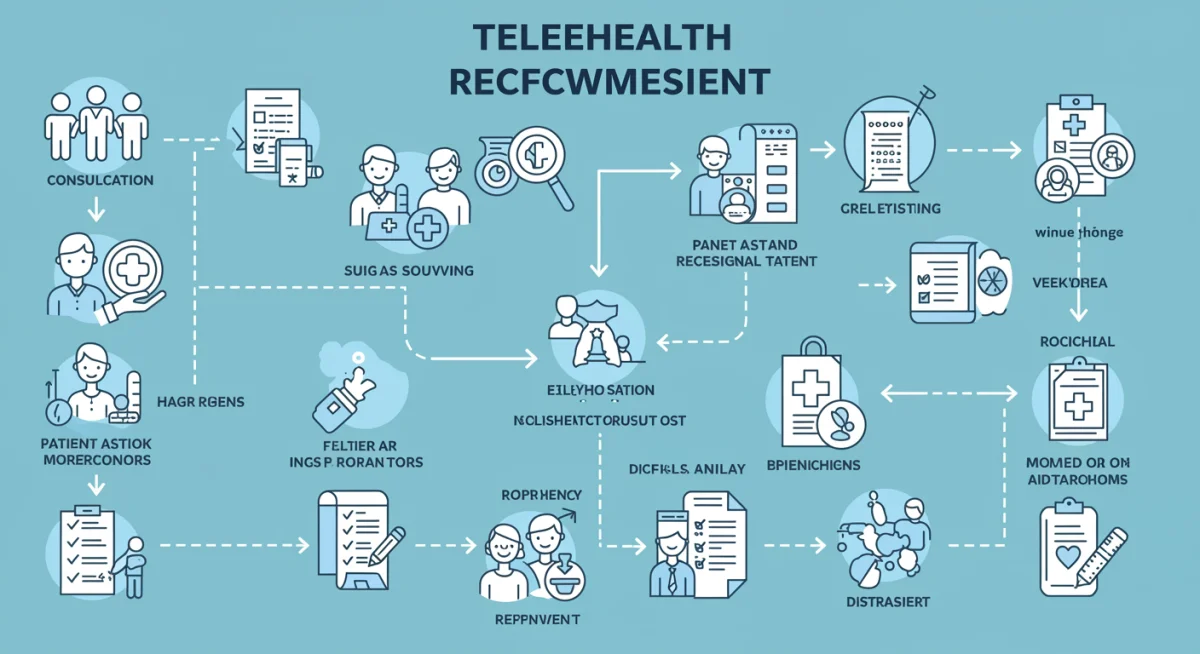
Understanding these intricacies is paramount for accurate billing and avoiding potential compliance issues. It’s not just about what services can be provided via telehealth, but how they are coded and justified for payment.
Medicare & Medicaid Reimbursement Updates
For Medicare beneficiaries, CMS is expected to finalize rules that codify many of the temporary telehealth expansions. This includes decisions on which types of providers can bill for telehealth, the types of services covered, and the payment parity with in-person visits. Medicaid programs, while having more state-level flexibility, often follow federal guidance, making these changes ripple across state lines.
- Payment Parity Considerations: Debates continue regarding whether telehealth visits should be reimbursed at the same rate as in-person visits for all services.
- Behavioral Health Expansion: Significant expansions in telehealth coverage for mental health and substance use disorder services are anticipated to become permanent.
- Rural Health Clinic (RHC) & Federally Qualified Health Center (FQHC) Reimbursement: These entities are receiving specific attention to ensure they can effectively integrate telehealth into their service models.
Staying abreast of these specific program changes is vital. Providers serving Medicare and Medicaid populations must adjust their billing practices and service offerings accordingly to maximize reimbursement and ensure continuity of care. The goal is to create a sustainable model where telehealth is financially viable for all involved parties.
Interstate Licensure Changes and Compacts
The challenge of interstate licensure has long been a significant barrier to widespread telehealth adoption, particularly for providers wishing to serve patients across state lines. The federal telehealth policy updates for 2026 are expected to bring further clarity and, hopefully, greater uniformity to this complex issue. While individual state medical boards retain authority over licensure, federal initiatives are pushing for more streamlined processes and expanded interstate compacts.
Interstate medical licensure compacts allow physicians licensed in one participating state to practice in other participating states without obtaining multiple full licenses. These compacts are crucial for enhancing access to specialized care and enabling providers to follow patients who may relocate. However, the adoption rate of these compacts varies, and there’s a federal push to encourage more states to join.
The Role of Interstate Licensure Compacts
Several professional licensure compacts exist, such as the Interstate Medical Licensure Compact (IMLC), the Nurse Licensure Compact (NLC), and the Psychology Interjurisdictional Compact (PSYPACT). These compacts are designed to reduce the administrative burden on providers and facilitate cross-state practice. The federal government is keen on promoting the expansion and utilization of these compacts to create a more integrated national telehealth infrastructure.
- Increased State Participation: Expect continued advocacy for more states to join existing compacts to broaden their reach.
- Standardized Requirements: Compacts aim to standardize some aspects of licensure, though state-specific regulations may still apply.
- Telehealth-Specific Provisions: Some compacts are developing specific provisions to address the unique aspects of telehealth practice across state lines.
For providers, understanding which states participate in relevant compacts and the specific requirements for practicing under those agreements is essential. This information dictates where they can legally offer telehealth services and how they must navigate the regulatory landscape. Failure to comply with licensure laws can result in severe penalties, including loss of licensure.
Technological Standards and Security Protocols
As telehealth becomes more integrated into mainstream healthcare, the importance of robust technological standards and stringent security protocols cannot be overstated. The federal telehealth policy updates for 2026 will likely emphasize enhanced requirements for platforms, data privacy, and cybersecurity. This is crucial for protecting sensitive patient information and ensuring the reliability of virtual care delivery.
Healthcare providers must ensure their telehealth platforms comply with the latest HIPAA regulations and other federal data security mandates. This includes encryption standards, secure data storage, and authentication processes. The shift towards more permanent telehealth policies also means a greater focus on the interoperability of systems, allowing for seamless data exchange between different providers and electronic health records (EHRs).
Ensuring HIPAA Compliance in Telehealth
HIPAA remains the bedrock of patient data privacy in the United States. In the context of telehealth, compliance extends to every aspect of the virtual interaction, from the secure transmission of video and audio to the storage of patient records. The 2026 updates are expected to reinforce existing HIPAA requirements and potentially introduce new guidelines specifically tailored to emerging telehealth technologies and practices.
- Secure Platform Selection: Providers must use HIPAA-compliant telehealth platforms that offer end-to-end encryption.
- Business Associate Agreements (BAAs): Ensure all third-party vendors involved in telehealth services have appropriate BAAs in place.
- Patient Data Protection: Implement strong internal policies for protecting patient data during and after telehealth consultations.
Beyond HIPAA, providers should also be aware of state-specific data privacy laws, which can sometimes impose stricter requirements. Investing in secure technology and regularly training staff on best practices for data protection are critical steps in maintaining compliance and building patient trust in telehealth services.
Impact on Specific Healthcare Specialties
The federal telehealth policy updates for 2026 will not affect all healthcare specialties uniformly. While general primary care and behavioral health have seen rapid and widespread telehealth adoption, other specialties face unique considerations regarding reimbursement, technology, and clinical appropriateness. Understanding these nuanced impacts is key for providers within specific fields.
For example, specialties requiring physical examination or intricate diagnostic procedures may find certain aspects of telehealth challenging. However, even within these fields, telehealth can be invaluable for pre-operative consultations, post-operative follow-ups, chronic disease management, and remote monitoring. The policies are evolving to recognize these specific use cases and provide appropriate guidelines.
Telehealth in Behavioral Health and Primary Care
Behavioral health and primary care are arguably the greatest beneficiaries of telehealth expansion. The convenience and accessibility offered by virtual visits have significantly reduced barriers to mental health care and routine medical check-ups. The 2026 policies are expected to solidify and even expand reimbursement for these services, recognizing their proven effectiveness and patient satisfaction.
- Continuity of Care: Telehealth facilitates consistent follow-ups for chronic conditions and mental health disorders.
- Reduced Stigma: Virtual platforms can lower the perceived stigma associated with seeking mental health support.
- Preventive Care Access: Telehealth enables easier access to preventive screenings and health coaching.
Conversely, specialties like surgery or certain diagnostic imaging may see telehealth primarily used for pre-consultations or result discussions. The policies aim to strike a balance, promoting telehealth where it is clinically appropriate and effective, while ensuring that in-person care remains the standard when necessary. Providers in all specialties should assess how these updates specifically impact their practice models and patient care pathways.
Preparing Your Practice for 2026 Telehealth Changes
Proactive preparation is crucial for healthcare providers to navigate the federal telehealth policy updates for 2026 successfully. The changes in reimbursement, licensure, and technology demand a comprehensive review of current practices and strategic planning for future operations. This isn’t just about compliance; it’s about optimizing patient care and ensuring the long-term viability of your practice in a digitally transformed healthcare environment.
Begin by conducting an internal audit of your current telehealth services. Evaluate your technology stack, billing procedures, staff training, and patient consent processes. Identify any gaps or areas that may fall short of the upcoming federal guidelines. Engaging with legal and compliance experts can provide invaluable insights and ensure your practice is fully prepared.
Key Steps for Practice Readiness
Transitioning smoothly into the new regulatory environment requires a multi-faceted approach. It involves not only understanding the policies but also implementing practical changes within your organization. This includes everything from updating your EHR system to reflect new billing codes to training your administrative and clinical staff on the latest protocols.
- Policy Review and Adaptation: Regularly monitor official publications from CMS and other relevant federal agencies for detailed policy announcements.
- Technology Upgrade: Ensure your telehealth platform meets new security and interoperability standards, and explore advanced features for enhanced patient engagement.
- Staff Training and Education: Provide ongoing training to all staff members on updated billing codes, documentation requirements, and patient communication best practices.
- Patient Communication Strategy: Transparently communicate changes in telehealth services and policies to your patients, ensuring they understand their options and responsibilities.
By taking these proactive steps, healthcare providers can confidently adapt to the evolving telehealth landscape. This preparation will not only ensure compliance but also position practices to leverage telehealth’s full potential, improving patient access, efficiency, and overall care quality.
| Key Policy Area | Brief Description of 2026 Updates |
|---|---|
| Reimbursement Guidelines | CMS is standardizing payment for virtual services, formalizing many pandemic waivers, and clarifying CPT/HCPCS codes for telehealth. |
| Interstate Licensure | Federal efforts focus on expanding and promoting interstate medical licensure compacts to facilitate cross-state telehealth practice. |
| Technological Standards | Increased emphasis on HIPAA compliance, data security, encryption, and interoperability for all telehealth platforms and services. |
| Specialty Impacts | Behavioral health and primary care continue to see robust support, with tailored considerations for other specialties. |
Frequently Asked Questions About Telehealth Policy
The primary changes include the formalization of many temporary waivers, clearer distinctions for synchronous and asynchronous services, and specific updates to CPT/HCPCS codes. CMS aims to standardize payment for virtual care, impacting how providers bill for various telehealth services.
Interstate licensure changes, particularly the expansion of compacts like IMLC and NLC, aim to simplify practicing across state lines. Providers must check which states participate in compacts relevant to their profession to ensure legal compliance when offering telehealth to patients in different states.
While the full extent is still being finalized, it is anticipated that certain audio-only telehealth services will continue to be reimbursed, especially for specific populations or in situations where audio-visual technology isn’t feasible. Providers should monitor CMS guidelines for precise details and eligible service codes.
Telehealth platforms must adhere to stringent HIPAA compliance standards, including robust data encryption, secure storage, and authentication protocols. Increased emphasis will also be placed on interoperability to facilitate seamless data exchange between providers and electronic health record systems.
Preparation involves regularly monitoring official policy announcements, auditing current telehealth practices for compliance gaps, upgrading technology to meet new standards, and providing comprehensive staff training on updated billing and documentation requirements. Proactive communication with patients about service changes is also vital.
Conclusion
The federal telehealth policy updates for 2026 represent a pivotal moment for virtual care in the United States. These comprehensive changes to reimbursement guidelines, interstate licensure, and technological standards underscore a commitment to integrating telehealth as a permanent, high-quality component of healthcare delivery. For healthcare providers, proactive engagement with these updates is not merely a regulatory necessity but an opportunity to refine practices, enhance patient access, and ensure the long-term sustainability of their services. Staying informed, adapting operational workflows, and investing in compliant technology will be paramount for thriving in this evolving landscape.