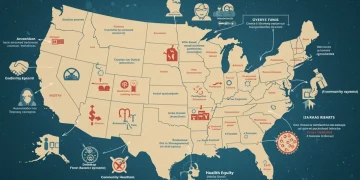
2025 Federal Funding for Public Health Initiatives: A Budget Breakdown
The 2025 federal budget for public health initiatives outlines critical allocations impacting disease prevention, health equity, and preparedness, reflecting strategic investments in the nation's healthcare infrastructure and future well-being.

Functional Fitness: New Training Methodologies for US Gyms in 2025
Discover the forefront of fitness with the latest functional training methodologies reshaping US gyms in 2025, focusing on practical, holistic solutions for improved physical capabilities and overall health.

Sustainable Wellness: Eco-Trends Redefining US Health 2025
Sustainable wellness trends are profoundly reshaping the health landscape in the US by 2025, driving eco-conscious consumer behavior and fostering significant financial innovation across the wellness industry.

2025 Guide: Skin Cancer Prevention & Early Detection
This 2025 guide details five essential steps for skin cancer prevention, emphasizing effective sun protection and vital early detection techniques to significantly reduce risk and improve outcomes.

Workplace Mental Health: New US Guidelines by June 2025
New federal guidelines mandate US employers to implement enhanced workplace mental health support by June 2025, requiring proactive strategies for employee well-being and a supportive work environment.

Digital Therapeutics for Mental Health: Q1 2025 Market Overview
The Q1 2025 market for digital mental health therapeutics reveals significant growth, driven by technological advancements and increasing patient demand for accessible, personalized mental healthcare solutions across the United States.

Invest $100 Annually in Wellness, Save $1,000+ in Healthcare by 2026
Investing a mere $100 annually in preventative care can yield over $1,000 in healthcare cost savings by 2026, demonstrating a significant financial return on wellness for individuals in the United States.

Mental Health Benefits: Act Before Dec 31, 2026 Deadline
To maximize mental health benefits, understand your plan's provisions, utilize available services, and act decisively before the December 31, 2026 deadline to ensure continuous access to vital care.

The 2026 No Surprises Act: Protecting Consumers from Unexpected Medical Bills
The 2026 No Surprises Act significantly enhances consumer protection by targeting unexpected medical bills, ensuring greater transparency and financial predictability in healthcare services across the United States.

Mindfulness in the Mainstream: 2026 Projections for Corporate Wellness in US
By 2026, corporate wellness programs in the US are projected to mainstream mindfulness, integrating it deeply into employee well-being initiatives to foster resilience, reduce stress, and boost overall productivity across diverse industries.

Telehealth vs. In-Person Therapy: Stress Management Outcomes 2026
In 2026, comparing telehealth and in-person therapy for stress management reveals nuanced outcomes, with telehealth often offering greater accessibility and convenience, while in-person sessions may foster deeper therapeutic relationships for some individuals.